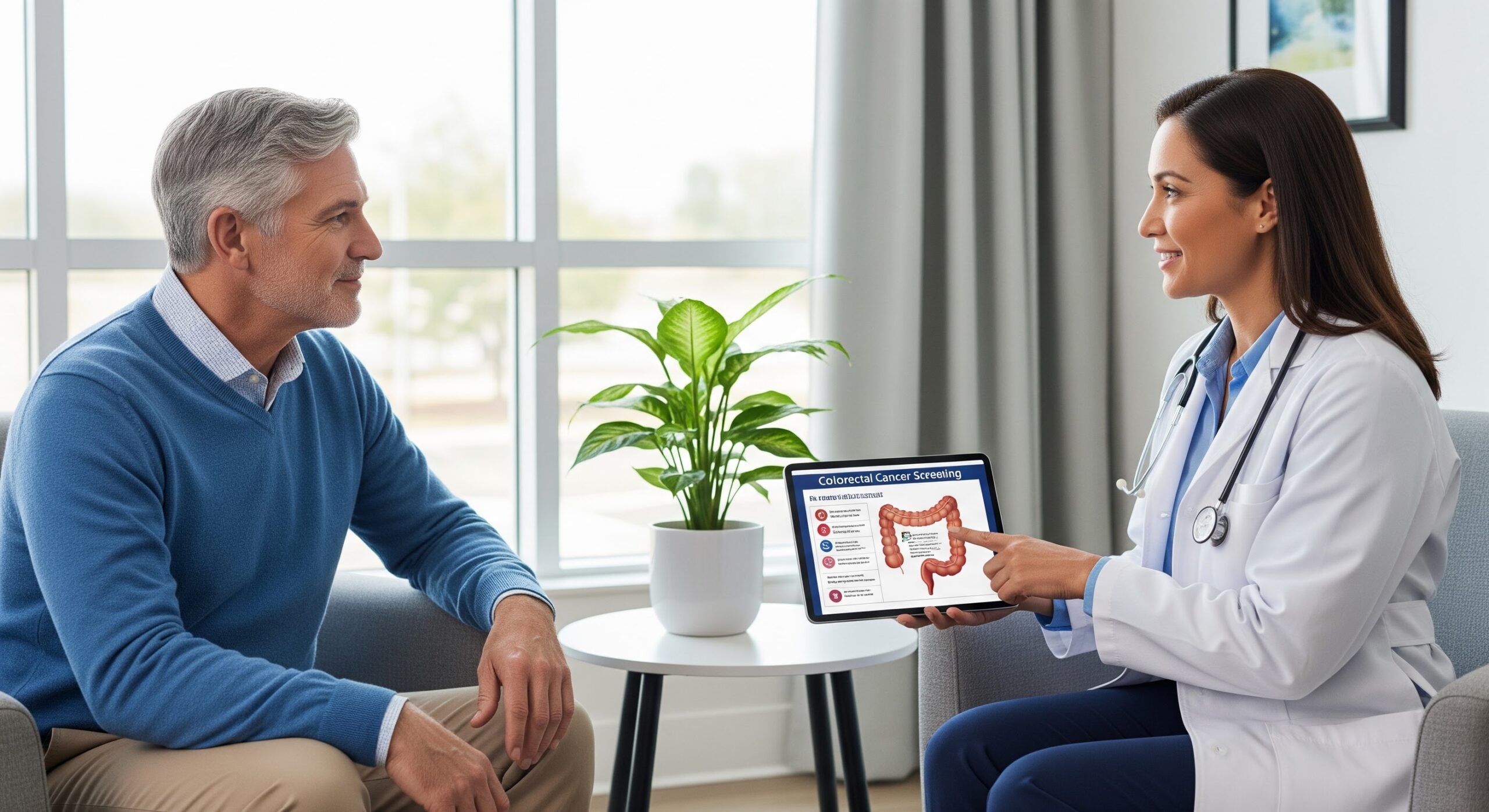
Colorectal Cancer Screening: Why Knowing Your Risk Matters
Colorectal cancer screening is a powerful preventive tool that can detect cancer early—or even prevent it altogether. Understanding your risk and staying up to date with recommended screenings can make a life-saving difference.
What Is Colorectal Cancer?
Colorectal cancer affects the colon or rectum and often begins as small growths called polyps. These polyps may not cause symptoms at first, which is why screening is so important.
When detected early, colorectal cancer is one of the most treatable forms of cancer.
Why Screening Is So Important
Screening can:
- Detect cancer before symptoms appear
- Identify and remove precancerous polyps
- Reduce the risk of advanced disease
- Improve treatment outcomes and survival rates
Many people feel well at the time of diagnosis, making routine screening critical.
Understanding Your Personal Risk
Risk for colorectal cancer can vary based on several factors, including:
- Age
- Family history of colorectal cancer or polyps
- Personal history of digestive conditions
- Lifestyle factors such as diet, physical activity, and smoking
Your healthcare provider can help determine when and how often you should be screened.
Common Screening Methods
There are multiple screening options available, and the right one depends on your risk level and preferences.
Screening methods may include:
- Stool-based tests
- Imaging-based exams
- In-office procedures that examine the colon directly
Each option has its own schedule and preparation requirements.
When to Talk to Your Doctor
It’s important to discuss screening with your healthcare provider even if you feel healthy. They can help you:
- Understand your risk
- Choose an appropriate screening method
- Stay on track with follow-up care
Early conversations lead to proactive prevention.