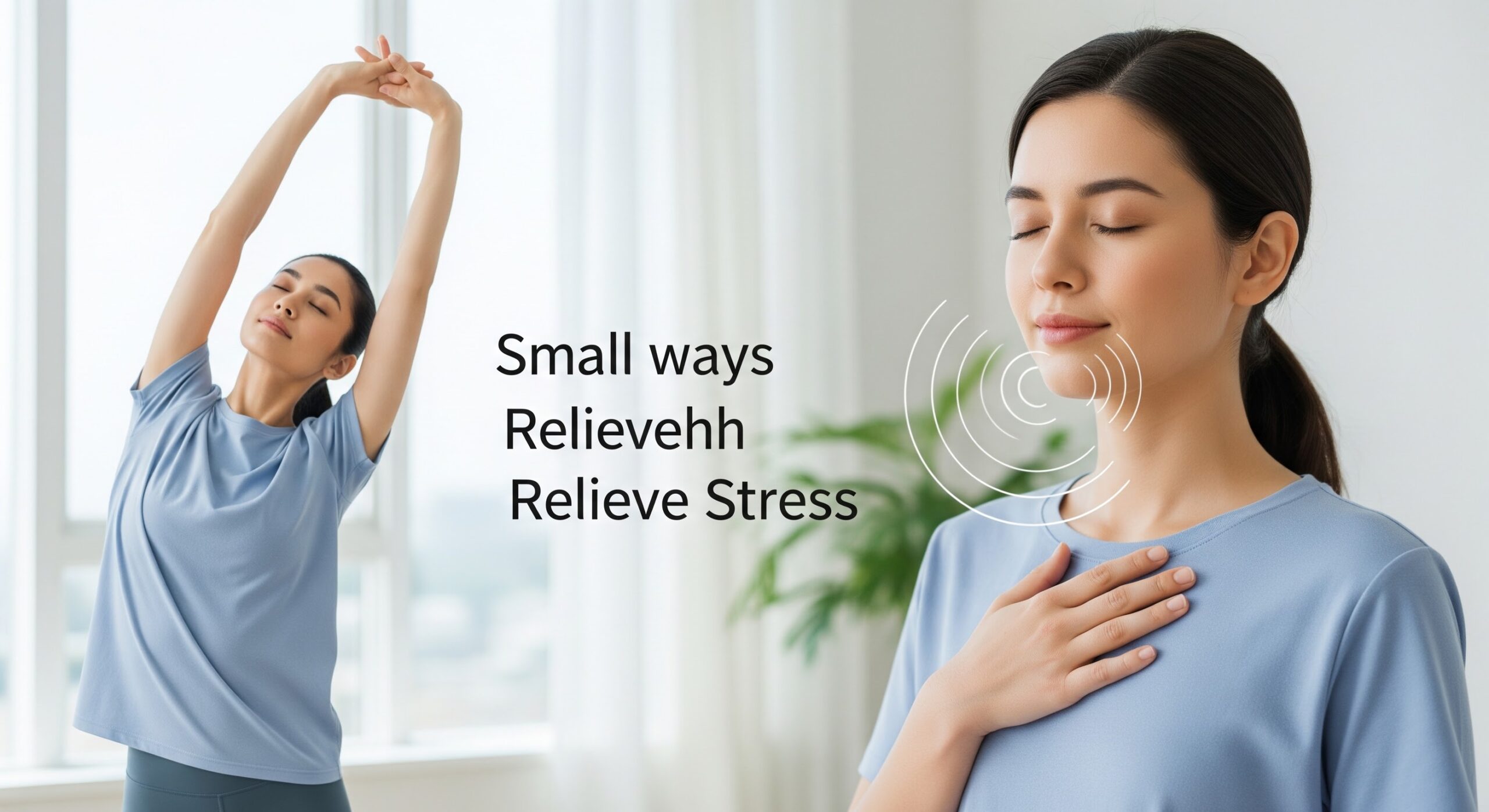
Twelve Small Ways to Relieve Stress Starting Today
Stress is a part of everyday life, but small actions can help reduce its impact. You don’t need a major lifestyle overhaul to feel calmer—simple, intentional choices can make a noticeable difference right away.
Why Small Stress-Relief Actions Work
Stress builds up over time, often from many small pressures rather than one big event. Addressing stress in small, manageable ways helps prevent it from becoming overwhelming.
Benefits of small stress-relief habits include:
- Easier consistency
- Less pressure to “do it perfectly”
- Quick emotional resets throughout the day
Even brief moments of calm can add up.
Quick Ways to Calm Your Mind and Body
These simple actions can be done almost anywhere and anytime:
- Take a few slow, deep breaths
- Stretch your neck, shoulders, or back
- Step outside for fresh air
- Drink a glass of water
- Close your eyes for one minute
- Listen to calming music
Each takes only moments but can help reset your nervous system.
Mental Shifts That Reduce Stress
How you think about stress matters just as much as what you do.
Helpful mental resets include:
- Letting go of perfection
- Focusing on one task at a time
- Reminding yourself that pauses are productive
- Practicing gratitude for small wins
Changing perspective can ease emotional tension.
Use Your Environment to Support Calm
Your surroundings can either add to stress or help reduce it.
Simple environmental changes include:
- Decluttering one small area
- Lowering noise levels when possible
- Adjusting lighting for comfort
- Creating a short, calming routine
Small adjustments can make daily spaces feel more supportive.
Make Stress Relief a Daily Habit
Stress relief works best when practiced regularly, not just during high-stress moments.
Try:
- Pairing stress relief with daily routines
- Setting gentle reminders to pause
- Choosing one or two strategies to repeat daily
Consistency helps your body learn to relax more easily.